Tiered Link Building With GSA SER
Mastering Tiered Link Building with GSA SER
Link building remains the backbone of off‑page SEO, but throwing thousands of random backlinks at a money site now invites penalties instead of rankings. The solution is a layered strategy that buffers risk more info and maximizes link juice – and that’s where tiered link building with GSA SER comes in. By creating a controlled pyramid of backlinks, you can pump authority into your main project while keeping low‑quality links safely away from direct contact with your money page.
What Is Tiered Link Building?
Think of a pyramid. At the top sits your money site (Tier 0), the asset you want to rank. Directly pointing to it is a set of high‑quality, contextual links from guest posts, niche edits, or powerful web 2.0 properties – these are Tier 1. Tier 2 links point to Tier 1 properties, and Tier 3 links point to Tier 2, and so on. As you move down the tiers, the quality requirements relax while volume increases. This structure filters out toxic signals and passes authority upward, making it a sustainable way to scale link building without red flags.
Why GSA SER Fits This Model Perfectly
GSA Search Engine Ranker is a desktop automation tool designed for mass link creation. It can submit to thousands of platforms – article directories, social bookmarks, wikis, forum profiles, image comments, and more – at a speed no manual outreach can match. But using it directly on a money site is a recipe for disaster. The magic happens when you deploy it on lower tiers:
- Volume without risk: Tier 2 and Tier 3 links don’t need to be pristine; they just need to index and pass a fraction of link equity. GSA SER excels here, generating enormous quantities of links that boost the authority of your Tier 1 buffers.
- Link diversity: Search engines favor natural backlink profiles. GSA creates a wild mix of link types, anchor texts, and platforms that mimics organic growth for your buffer properties.
- Indexation push: Many GSA links are on low‑quality pages, but tools like indexers and pinging can force indexing. The cumulative effect helps your Tier 1 pages get noticed and crawled faster.
- Cost efficiency: Compared to paying for dozens of high‑quality guest posts, tiered link building with GSA SER slashes the cost per unit of authority passed to your money site.
How to Build a Tiered Link Pyramid with GSA SER
1. Foundation: Create Strong Tier 1 Assets
GSA SER never touches your money site directly. Start by constructing a solid Tier 1 of manually created, indexable properties that link to your money page with relevant, branded anchors. Good examples:
- High‑quality web 2.0 blogs (WordPress, Blogger, Weebly) with unique content.
- Medium or Substack articles.
- Social profiles, YouTube channels, or podcast descriptions.
- PDF sharing sites (SlideShare, Scribd) with actual whitepapers.
These Tier 1 pages should have a minimal number of outbound links (ideally 1‑2) and feature at least 500 words of readable, topic‑relevant content. They are the buffer, so treat them with care.
2. Configure GSA SER for Tier 2
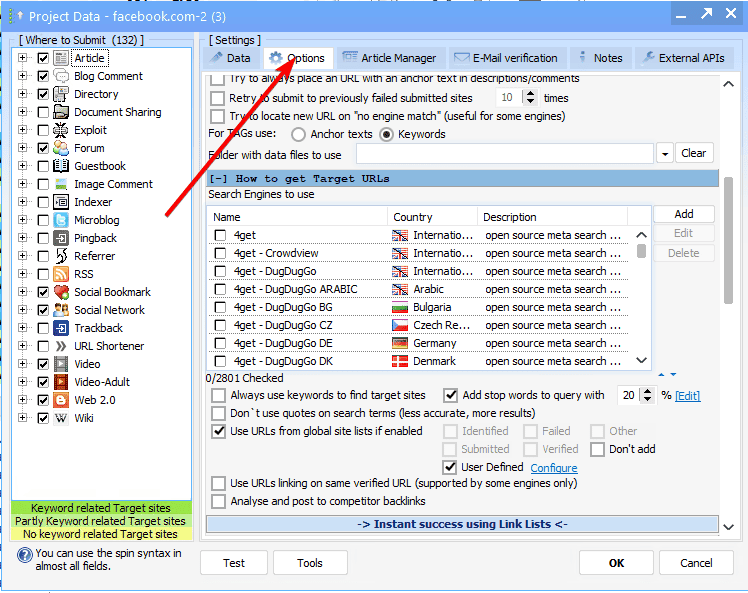
Tier 2 links point to your Tier 1 properties. Here, you can open the taps. Set up a campaign in GSA SER with the following key settings:
- Target URLs: Insert the URLs of all your Tier 1 pages. Do not mix in money site URLs.
- Platform selection: Enable article directories, social bookmarks, wiki articles, web 2.0 blogs (lower quality ones), forum profiles, and image comments. Disable anything that sounds highly spammy like guestbook comments or excessive URL shorteners.
- Anchor text ratio: Use a heavy dose of generic, naked URL, and long‑tail anchors. Keep partial‑match and branded anchors moderate. Avoid exact match anchors above 1‑2%.
- Content sources: Spintax articles (heavily spun unique‑enough variants) work well for T2. You can also scrape and spin content from article builder integrations.
- Filters: Set minimum PR/DA thresholds for posting, require that target sites are indexed, and limit OBL (outbound links) to avoid near‑dead platforms.
Run a moderate number of verified links per day (e.g., 50–150) to mimic natural accretion. You can scale up later if your Tier 1 properties remain healthy.
3. Tier 3 and Beyond – The Indexing Engine
Tier 3 links point to Tier 2 pages. This layer is almost exclusively about pushing indexing power and can be fully automated with GSA SER on aggressive settings. You can enable more spam‑leaning platforms like guestbooks, comment spam, and stats sites, but still avoid malware and adult content. The goal is raw volume: hundreds or thousands of links that force search engines to crawl and index your Tier 2 links, which in turn pass authority upward.
Many practitioners stop at Tier 3 because each additional tier dimishes returns. Overdoing it (Tier 4, 5) often leads to a dilution of power and indexing problems.
Best Practices for Tiered Link Building with GSA SER
- Use dedicated proxies: Run GSA behind semi‑dedicated or private proxies. Rotating residential proxies (4G/LTE) work exceptionally well to avoid IP bans.
- Always verify links: Let GSA verify each submission. Only verified links count. Delete links that fail after a day.
- Control link velocity: Avoid spikes. Use the scheduler to drip‑feed link creation over weeks, simulating organic growth.
- Indexing matters: Pour GSA links into an indexer like Omega Indexer or use a link‑indexing service, and pair it with occasional social signals. A Tier 2 link that doesn’t get indexed passes zero value.
- Diversify anchor text heavily: At lower tiers, anchors should be natural – mostly naked URLs, click‑here variations, and brand‑related terms. This protects your Tier 1 from any over‑optimization footprint.
- Track key metrics: Monitor the referring domains and IP diversity of your Tier 1 properties using tools like Ahrefs or Majestic. If you see unusual drops, pause GSA campaigns and investigate.
- Rotate content aggressively: Never reuse the same spun article across thousands of submissions. Use multiple large spintax files, fetch fresh content from RSS feeds, or integrate content generators.
Common Mistakes to Avoid
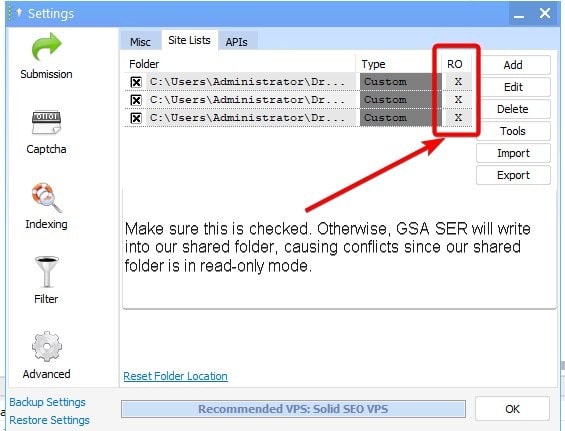
1. Pointing GSA links directly at money sites. This shortcuts the buffer and exposes your main domain to a flood of low‑quality links. Even if you use “high quality†GSA settings, it’s rarely worth the risk.
2. Ignoring Tier 1 maintenance. If your web 2.0 blogs get deleted or deindexed, all downstream effort is wasted. Build them on reliable platforms and occasionally update them with fresh content.
3. Running GSA without filters. Accepting every link from every platform not only harms your buffers but can also burn IPs and proxies quickly. Use the built‑in filters aggressively.
4. Relying solely on one anchor pattern. A footprint of repeated exact‑match text across thousands of T2 links can trickle up and flag your T1 pages.
5. Forgetting about link velocity patterns. A brand‑new T1 page getting 5,000 backlinks overnight looks unnatural. Always ramp up campaigns gradually.
Frequently Asked Questions
Is tiered link building with GSA SER safe for a long‑term site?
Yes, as long as there is a strict separation between the money site and automated links. By never using GSA on the money page directly and keeping Tier 1 assets high quality, the risk remains low. However, all link building carries some risk; monitor your backlink profile regularly and disavow only if absolutely necessary.
How many tiers do I really need?
For most projects, three tiers are sufficient. Tier 1 → Tier 2 → Tier 3 provides enough authority push and indexing power. Adding more tiers often complicates the chain and yields negligible benefit.
Can I use GSA SER for Tier 1 links?
It’s not recommended. Tier 1 links need manual control, unique content, and contextual relevance. GSA‑created links are too generic and carry a high deletion rate. Hand‑crafted or purchased guest posts and niche edits make far safer Tier 1 assets.
What platforms work best in GSA SER for Tier 2?
Article directories (still available), social bookmarks with some authority, wiki sites that survive moderation, and forum profiles are sweet spots. Avoid over‑optimized directories and comment sections unless you’re building Tier 3 exclusively for indexing.
How long until I see ranking improvements?
Indexing of T2 and T3 links can take weeks. You’ll typically notice movement in weeks 4–8 after a blast, but it depends on competition, niche, and the strength of your Tier 1 properties. Continual drip‑feeding produces more sustainable gains than one‑time explosions.
Do I need to index the GSA links manually?
Yes. Most low‑tier links won’t be crawled naturally. Feed verified links into an indexing tool or use methods like video sitemaps, social sharing, and shortlink redirects to force crawling. Without indexed links, the whole pyramid collapses.
Final Thoughts
Tiered link building with GSA SER is a power‑user strategy that can dramatically amplify your SEO when executed with discipline. The tool handles the volume, while the tiered structure keeps your money site insulated. Stick to a clear separation of tiers, invest time in crafting durable Tier 1 assets, and let automation do the heavy lifting on the lower levels. With steady monitoring and gradual scaling, this approach offers one of the most cost‑effective ways to build search engine trust in competitive niches.